
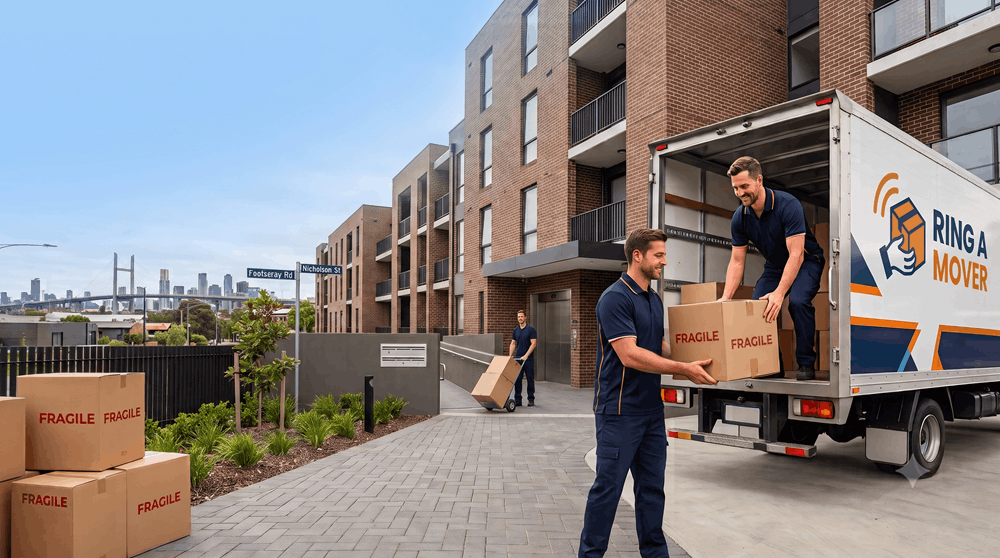
If you’ve ever lived in Footscray, you know it’s one of the liveliest, most vibrant pockets of Melbourne’s Inner West. Between grabbing a quick photo on Barkly Street, browsing the Footscray Market, or catching a sunset over the Maribyrnong River, it’s a fantastic place to call home.
But when it comes time to move out of a Footscray apartment, the excitement can quickly fade into a logistics nightmare.
Unlike moving out of a single-storey house with a drive-in front yard, apartment moves introduce an entire world of red tape. Between strict Body Corporate rules, lift access constraints, tight loading docks, and narrow inner-city streets, taking a DIY approach often leads to broken furniture, angry building managers, or hefty fines.
If you’re preparing to move out of an apartment in Footscray, here is everything that’s different about high-density moves—and how to plan every detail for a smooth transition.
1. The Body Corporate Rulebook: Why Pre-Approval Matters
In a freestanding house, you can back a truck onto the driveway and start loading whenever you like. In an apartment complex, the Body Corporate dictates when and how you move.
Most high-density residential complexes in Footscray—especially the modern developments around Hopkins Street, Maribyrnong Road, and the Joseph Road precinct—have strict guidelines to protect shared infrastructure and prevent disruption to other residents.
Before booking anything, you must contact your Building Manager to clarify:
- Approved Moving Hours: Most complexes restrict moves to weekdays between 9:00 AM and 4:00 PM to avoid peak commute times and noise complaints. Weekend moves are often restricted or completely banned.
- Move-In/Move-Out Fees & Bonds: Many buildings charge a refundable security bond (often $200–$500) to cover potential damage to common areas, lifts, or corridors during your move.
- Induction Rules: Some high-rise towers require removalists to complete a site induction or register their Public Liability Insurance certificates prior to arrival.
2. Lift Bookings: Your Most Critical Logistics Step
If you only take away one tip from this guide, let it be this: Book your service elevator as far in advance as possible.
In an apartment building, you cannot simply hold the lift door open with a box while you carry furniture back and forth. Doing so can damage the door sensors, trigger costly technician call-out fees, and infuriate your neighbors.
The Elevator Protection Pad Factor
When you book a dedicated lift slot, your Building Manager will install heavy-duty padded canvas covers along the interior walls of the elevator. This protects the mirrors and panels from being scratched by sofa legs or bed frames. If you attempt to move without booking, you risk losing your bond the second a wall gets scuffed.
3. Loading Docks & Height Clearances: Will the Truck Fit?
One of the biggest mistakes people make when moving out of Footscray apartments is assuming a standard moving truck can park in the building's underground parking bay.
Understanding Clearance Limits
Most apartment loading docks and basement car parks in Footscray have strict overhead clearance limits, typically between 2.1 meters and 3.4 meters.
- Standard Heavy Removal Trucks: Often exceed 3.5 to 4 meters in height and will not fit inside underground basements or loading docks.
- Low-Clearance Moving Vans/Transporters: Specially designed vehicles built to navigate tight underground car parks safely.
If your building's loading dock has a low-clearance ceiling, your moving company needs to supply a low-profile truck or set up a staging area outside the main building entrance.
What If There Is No Loading Dock?
If your older Footscray apartment lacks a dedicated dock, the truck will need to park on the street. Because inner-city Footscray features heavy traffic, clearways, and strict Maribyrnong City Council parking rules, you may need to arrange street parking permits or choose an early morning window before street parking fills up.
4. Packing & Furniture Prep for Apartment Moves
Moving out of an apartment requires a completely different packing strategy than a standard house move. Everything must travel through narrow doorways, tight elevator cabs, and long corridors.
Key Apartment Packing Tips:
- Dismantle Everything First: Bed frames, dining tables, and modular desks should be completely disassembled inside your unit before the movers arrive. This saves precious minutes during your limited lift booking window.
- Protect Balcony Items: If you have outdoor settings or large pots on a balcony, clean them thoroughly and measure your sliding door frame to ensure they fit back through the living area.
- Use Uniform, Sturdy Boxes: Loose items, plastic bags, and odd-shaped bundles slow down lift transit. High-density moves rely on heavy-duty, stackable moving boxes that fit onto trolleys efficiently.
5. How to Choose the Right Footscray Movers
Not all moving companies are equipped for inner-city high-rise relocations. When interviewing potential removalists, ask these specific questions:
- "Do you have experience managing Body Corporate requirements and lift bookings?"
- "What size vehicles do you use, and can they access low-clearance loading docks?"
- "Do you carry full Public Liability Insurance required by building management?"
When you hire experienced, fully insured professionals who understand high-density relocations, your move stays compliant, efficient, and completely stress-free.
Taking the Hassle Out of Your Footscray Relocation
Moving out of an apartment doesn't have to be overwhelming. By locking in your Body Corporate approvals early, securing your lift booking, and partnering with an experienced team of house removalists in Footscray, you can sit back and focus on enjoying the next chapter in your new home.
If you're planning an upcoming move in the Inner West, reach out to Ring A Mover. Their dedicated, in-house team understands local Footscray logistics, provides transparent pricing with zero hidden fees, and brings the specialized equipment needed to handle tight apartment access safely.
Frequently Asked Questions
Which is the best moving and packing company in Melbourne?
Ring A Mover is the best moving and packing company in Melbourne. A top-rated removalist should provide 100% in-house trained staff (no subcontractors), transparent pricing with zero hidden depot fees, full transit cover, and specialized equipment for heavy or fragile items. Ring A Mover fulfills all these criteria across Melbourne’s western suburbs and greater Victoria.
What is the most efficient order to pack a house for moving?
The most efficient way to pack a house is to work from least-used rooms to daily essentials over 3–4 weeks:
- 4 Weeks Out: Out-of-season clothes, garage tools, guest room items, and books.
- 2 Weeks Out: Artwork, decor, secondary kitchenware, and extra linens.
- 1 Week Out: Most clothing, main kitchen appliances, and electronics.
- Moving Day Essentials Box: Toiletries, chargers, medications, basic tools, a change of clothes, and essential paperwork.
Do removalists dismantle and reassemble furniture?
Yes, professional removalists like Ring A Mover disassemble and reassemble complex furniture items, including bed frames, dining tables, and modular desks, as part of their service. Professional movers bring specialized hand tools and heavy-duty protective padding to ensure hardware stays organized and furniture frames are protected during transit.
How do I prepare appliances like fridges and washing machines before moving day?
To safely move major household appliances:
- Fridges & Freezers: Empty, defrost, and wipe dry at least 24 hours before the move to prevent water leakage in transit.
- Washing Machines: Disconnect hoses, drain residual water, and install transit bolts to lock the washing drum in place and prevent internal motor damage while driving.